IN THIS ARTICLETable of contents20 sections
Intimacy in a long-term relationship does not always stay the same. Even when the love is still there, the way couples connect can change over time.
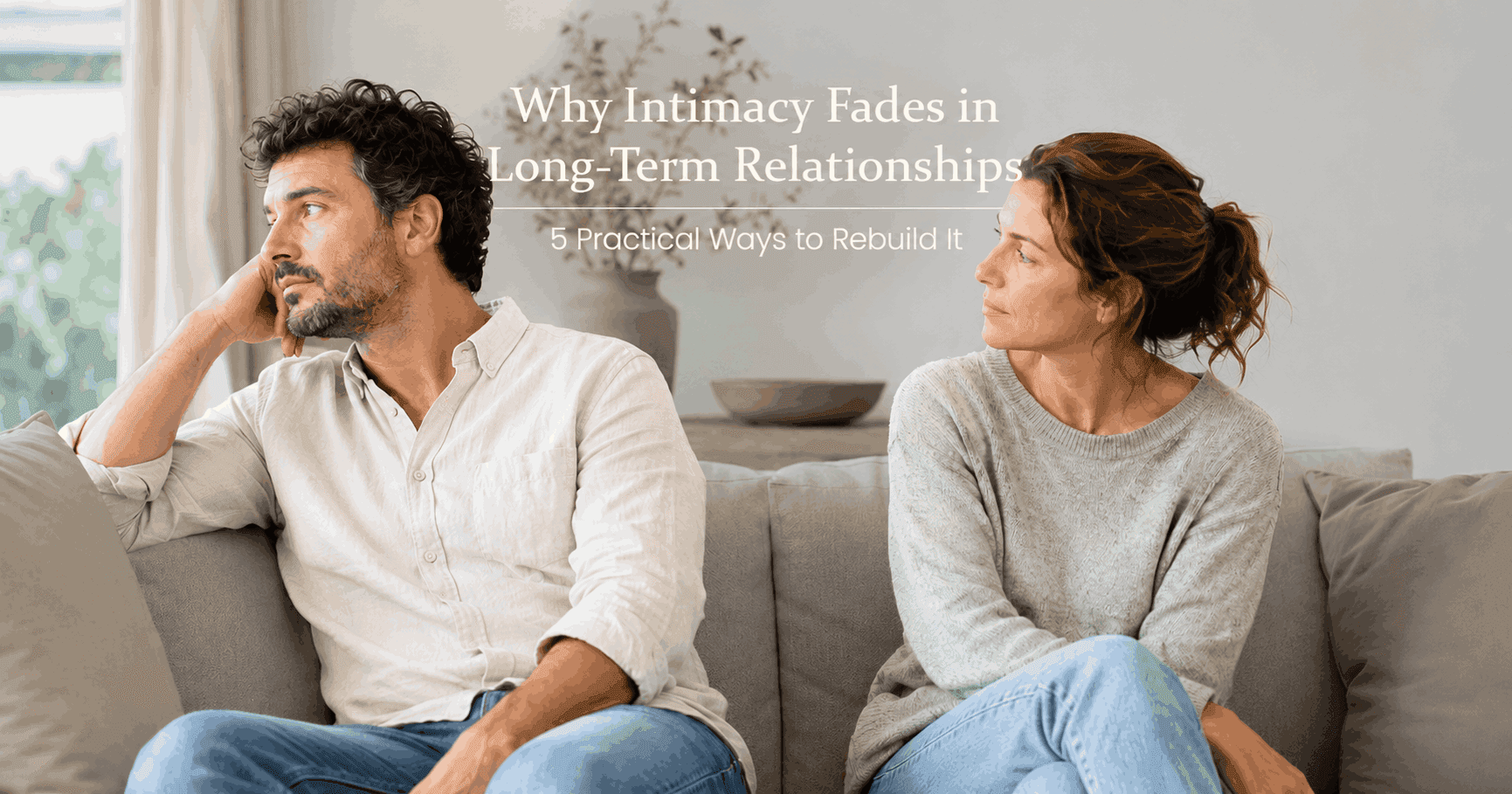
Couples may share a home, daily responsibilities, inside jokes and years of memories. But affection can slowly become less frequent. One partner may want more closeness while the other seems less interested, and neither may know exactly when things started to feel different.
Intimacy usually does not disappear all at once. It often changes slowly because of stress, routine, unresolved problems and changing needs.
Less intimacy does not always mean less love. Sometimes it simply means the relationship needs more time, attention and connection again.
Quick Answer
Intimacy can slowly change because of stress, routine, ongoing problems, changes in desire or health issues. Couples can start rebuilding it by talking openly, showing affection without pressure, making time for each other, trying new things together and finding simple ways to feel close again.
Table of Contents
Why Intimacy Fades in Long-Term Relationships
Intimacy can slowly fade when couples become more focused on managing daily life than spending time connecting with each other.
Work, chores and other responsibilities can take over. Conversations may become more about plans and tasks. Small problems may stay unresolved. One partner may feel pressured, while the other may feel rejected.
Poor sleep, stress, health changes, body image, hormones or medication can also affect intimacy.
Usually, there is not just one reason. Several things can affect how close a couple feels over time.
The first step is not to blame each other. It is to understand how both partners feel about the relationship and intimacy right now.
Intimacy Is More Than Sex
When people hear “lack of intimacy,” they often think only about sex. However, intimacy can appear in several forms, and each one contributes differently to how connected a couple feels.
| Type of intimacy | What it means | Simple examples |
|---|---|---|
| Emotional intimacy | Feeling understood, accepted and safe enough to be honest | Sharing worries, expressing needs and feeling supported |
| Physical intimacy | Closeness expressed through affectionate or sexual touch | Holding hands, hugging, kissing, cuddling and sex |
| Conversational intimacy | Talking about thoughts, feelings and personal ideas not only daily responsibilities | Discussing hopes, fears, memories and personal ideas |
| Experiential intimacy | Feeling connected through meaningful shared experiences | Travelling, cooking, walking or trying something new together |
A couple can have sex often and still feel distant from each other. Another couple may have sex less often but still feel close, loved and happy in the relationship.
There is no fixed number that makes a relationship healthy. What matters is how both partners feel. If both feel comfortable, valued and connected, the frequency may not be a problem. But if one or both feel lonely, pressured or unhappy, it may be something worth talking about.
Why Intimacy Gradually Fades
Daily Life Replaces Connection
Long-term relationships need a lot of teamwork.
Bills have to be paid, children need attention, the house needs to be managed, and work can follow people into the evening through messages and unfinished tasks.
Over time, couples can become very good at managing daily life but spend less time really connecting with each other.
There is nothing wrong with talking about practical things. The problem starts when most conversations are only about tasks, plans and responsibilities.
Partners may begin to see each other mainly as a parent, provider or caregiver instead of as two people who still want to feel close and understood.
The love may still be there, but real time and attention for each other can become rare.
Unspoken Frustration Creates Emotional Distance
Distance does not always happen because a relationship becomes boring.
Sometimes it grows from problems that were never fully worked through.
One partner may feel like they are doing too much at home. The other may feel criticised all the time. A promise may have been broken, and even if the couple moved on, the trust may not feel the same.
Sometimes arguments stop because both people are tired, not because the problem is really solved.
When someone feels ignored, taken for granted or uncomfortable opening up, physical closeness can become harder.
This does not mean every change in desire comes from relationship problems. It simply means intimacy is often affected by how both partners feel about the relationship as a whole.
Research on married couples has also found links between communication, emotional closeness, sexual satisfaction and overall relationship satisfaction.
Partners Wait To Feel Desire
Many people think desire should happen in a simple order:
First, you feel interested. Then you want affection or sex.
But that is not how it works for everyone.
For some people, desire can come later. They may start to feel interested after they relax, feel emotionally close or begin enjoying affection.
Rosemary Basson’s influential sexual-response model helped explain that desire does not always have to come first before arousal or intimacy begins.
This does not mean anyone should keep going with touch they do not want.
Consent and comfort are always important. Responsive desire simply means interest can grow during an experience that already feels safe and welcome.
Sometimes the right mood and connection need to come first.
Affection Starts Feeling Like Pressure
A hug can stop feeling simple when one partner thinks it may lead to sex.
If that keeps happening, the partner with less interest may start avoiding touch. The other partner may feel rejected and try even harder to get close.
A difficult pattern can start:
- One person feels pressured.
- The other feels unwanted.
- Affection starts to feel tense.
- Both begin pulling away.
Neither person may want this distance, but both can end up feeling alone.
Rebuilding closeness often starts with making touch feel comfortable again. A kiss, cuddle or massage can stay just that unless both partners want more.
Stress and Physical Changes Affect Desire
Long-term relationships can go through different physical and emotional changes.
Stress, poor sleep, pregnancy, recovery after childbirth, menopause, pain, body-image concerns, ongoing health problems, erection problems, anxiety, depression and some medicines can all affect desire or comfort.
Research has found that high stress can make it harder for some women to feel physically aroused, especially when their mind is distracted or under pressure. This does not mean stress affects everyone in the same way, but it can make it harder to feel present and relaxed.
Sleep may also play a role. Some research has linked longer sleep with better sexual desire and response the next day in women.
These findings should not be used to diagnose your partner.
If pain, medication, hormonal changes, low mood or other health concerns are affecting intimacy, speak with a qualified healthcare professional. Relationship advice or a consumer product should not replace proper medical care.
For deeper understanding, read the research sleep and sexual response
5 Practical Ways to Rebuild Intimacy

1. Talk About the Distance Without Blame
Conversations about intimacy often happen at the wrong time, such as after rejection, during an argument or when one partner already feels upset.
What you say may come from real hurt, but it can quickly make the other person feel blamed.
Try to talk about how you feel instead of assuming why your partner acts a certain way.
You can ask:
- What does intimacy mean to you now?
- When do you feel closest to me?
- Has anything made affection harder for you?
- Is there something you have been afraid to tell me?
- What kind of closeness feels comfortable for you?
Then listen without thinking about how to defend yourself.
A 2022 meta-analysis covering 93 studies and more than 38,000 people found that better sexual communication was linked with higher relationship and sexual satisfaction. How well couples communicated seemed to matter more than how often they talked.
The first conversation does not need to solve everything. It just needs to make the topic easier and safer to talk about.
How Do You Talk About a Lack of Intimacy?
Choose a calm time, describe what you miss without blaming your partner, and ask how the relationship feels from their side.
Do not use the conversation to demand immediate affection or sex. Understand the distance together before deciding what needs to change.
2. Bring Back Affection Without Pressure
Couples who want to feel close again sometimes rush straight to the part they miss most.
That can make things feel more pressured.
It can help to start with simple affection that does not have to lead anywhere:
- Hold hands during a walk.
- Give a longer goodbye kiss.
- Cuddle for a few minutes.
- Offer a massage only if both people want it.
- Ask for a hug instead of assuming.
Then let the moment end without expecting more.
If one partner has started avoiding touch because every affectionate moment seems to lead to sex, respecting that limit can help rebuild comfort and trust.
Consent does not make affection awkward. It removes the guessing and helps both people feel more relaxed.
3. Protect Connection Before Trying to Create Passion
“Have more date nights” sounds simple, but it does not always solve the problem.
A couple can sit in a nice restaurant and still spend the whole evening talking about children, work, bills or other responsibilities. The place has changed, but their focus has not.
A better option is to create a small routine that helps both of you slow down and connect:
- Take a walk together once a week.
- Have tea together after things are quiet at home.
- Share breakfast before work.
For the first ten minutes, try not to talk about chores, money, work or children.
It does not have to feel romantic every time. The point is to give the relationship some time where nothing else needs your attention.
It is hard to feel close when the relationship only gets whatever time and energy are left at the end of the day.
4. Try Something New Without Pressure
Trying something new does not have to be big, expensive or unusual.
You could visit a new place, cook something different, take a class, change your usual walking route or take turns planning a simple activity.
The point is not that something new will fix the relationship. It simply gives both of you a chance to spend time together outside your normal routine.
Research by Muise and colleagues found that couples who shared new experiences reported links with desire and relationship satisfaction.
The activity does not need to lead to sex. If every shared experience comes with that expectation, it can create more pressure.
Choose something because you both want to enjoy it together.
5. Create an Intentional Shared Ritual
Small rituals can help couples shift their attention from daily responsibilities back to each other.
It can be something simple, such as:
- Cooking together
- Taking a bath
- Using conversation cards
- Writing each other a short note
- Planning a quiet evening at home
- Sharing a premium chocolate
For healthy adults who both want to try it, an intimacy chocolate can be one small part of the evening.
It should not be seen as something that fixes trust, treats low desire or guarantees a certain result. Its role can simply be to make the evening feel more special and different from the usual routine.
If you are new to the category, you can first read what intimacy chocolates for couples are. Those considering DZIR can separately review how DZIR intimacy chocolate works, including the product guidance and safety information. DZIR’s existing pages position the product as an adult, shared experience rather than a replacement for communication or relationship care.
If you use any intimacy product, both partners should agree to it first. Read the label, ingredients, warnings and directions.
Never add it to someone’s food without their clear knowledge and consent.
The shared choice matters more than the product.
Make Your Next Shared Moment More Intentional
For healthy adults who both want to try it, DZIR can be one optional part of a private evening together. It is not meant to fix relationship problems or low desire, and the experience can be different for each person.
Before using it, read the ingredients, safety information and directions on the product.
Explore DZIR Intimacy Chocolate
When You May Need Professional Help
Some intimacy problems can improve with open conversations, more time together and small changes at home.
Others may need professional help.
It may be worth speaking with a healthcare professional if intimacy is affected by:
- Pain or ongoing physical problems
- Medication
- Hormonal changes
- Erection problems
- Pregnancy or recovery after childbirth
- Ongoing tiredness
- Anxiety, depression or another health condition
A relationship therapist may help if conversations often turn into arguments, resentment has built up, trust has been badly hurt or it feels hard to talk about intimacy without blaming each other.
A sex therapist may help when problems with desire, arousal, pain, fear or sexual communication continue to cause stress.
A meta-analysis of couple therapy found that therapy helped improve important parts of relationship functioning, and many of those improvements continued over time. The research had some limits, but it still supports professional help as a valid option.
If there is fear, pressure, abuse or unwanted sexual contact, seek support right away.
Rebuilding intimacy should never mean giving up your boundaries.
What Progress Actually Looks Like
Progress does not always mean the passion comes back all at once.
It may look like:
- One honest talk that does not turn into an argument
- A hug that feels comfortable again
- More laughter during a normal evening
- Less fear of being rejected
- More interest in each other
- Making more time for the relationship
- Touch that does not feel pressured
- A better understanding of what each person needs
Physical intimacy may improve as these things get better. Sometimes, couples may also realize that other problems need attention first.
Look for more trust, warmth, comfort, attention and choice in the relationship.
Intimacy Is Rebuilt in Small Moments
Intimacy usually does not fade because of one big event. More often, stress, routine, unresolved problems and not enough time together slowly create distance.
Rebuilding closeness does not need one perfect date night or a sudden return of passion. It often starts with simple things: honest talks, affection without pressure, making time for each other and doing things together that help both partners feel close again.
The goal is not to copy someone else’s idea of a healthy relationship. It is to find a level of emotional and physical closeness that feels right for both partners.
For healthy adults who both want it, simple shared rituals like cooking together, putting phones away or sharing an intimacy chocolate can make private time feel more special. But no product can replace communication, consent or trust.
Closeness often grows when both people feel heard, respected and willing to make time for each other.
Frequently Asked Questions
Is It Normal for Intimacy to Fade in a Long-Term Relationship?
Changes in intimacy are common as responsibilities, health, stress and relationship patterns change.
Whether it represents a problem depends less on an outside standard and more on whether either partner feels lonely, pressured, dissatisfied or unable to discuss it.
Does Less Intimacy Mean the Relationship Is Ending?
Not necessarily.
Reduced intimacy may reflect exhaustion, unresolved conflict, health concerns, major life changes or differences in desire. It becomes more concerning when the distance is persistent and distressing or involves contempt, coercion, fear or a serious loss of trust.
Can Emotional Intimacy Return After Years of Distance?
Emotional intimacy can improve when both partners are willing to speak honestly, listen without immediate defensiveness and make consistent changes.
When the distance involves betrayal, trauma or severe resentment, professional support may make the process safer and more realistic.
How Can Couples Rebuild Physical Intimacy Without Pressure?
Begin with communication and mutually comfortable affection that does not have to lead to sex.
Ask what types of touch feel welcome, respect a “no” without punishment and allow closeness to develop gradually. Pressure may produce compliance, but it does not create genuine intimacy.
Can a Shared Romantic Ritual Improve Intimacy?
A ritual can protect time, increase attention and make an ordinary evening feel more meaningful.
It cannot replace emotional safety, honest communication or mutual interest. It works best when both partners choose it freely and value the shared experience itself.
Related posts

3 Sept 20268 min read
What Is DZIR Matchmeter? See Which DZIR Chocolate Fits You
Not sure which DZIR chocolate is right for you? The DZIR Matchmeter asks six quick questions about your goals and lifestyle, then gives you a personalized result and DZIR match.

16 Aug 20268 min read
How to Lower Stress Naturally Before Date Night
Feeling stressed before date night? Learn simple, practical ways to feel calmer, avoid last-minute pressure and enjoy the evening without overthinking.

21 Jun 202614 min read
Intimacy Chocolates for Couples: Real Benefits
Discover how intimacy chocolates for couples help build deep emotional connections, improve communication, and bring partners closer.