IN THIS ARTICLETable of contents54 sections
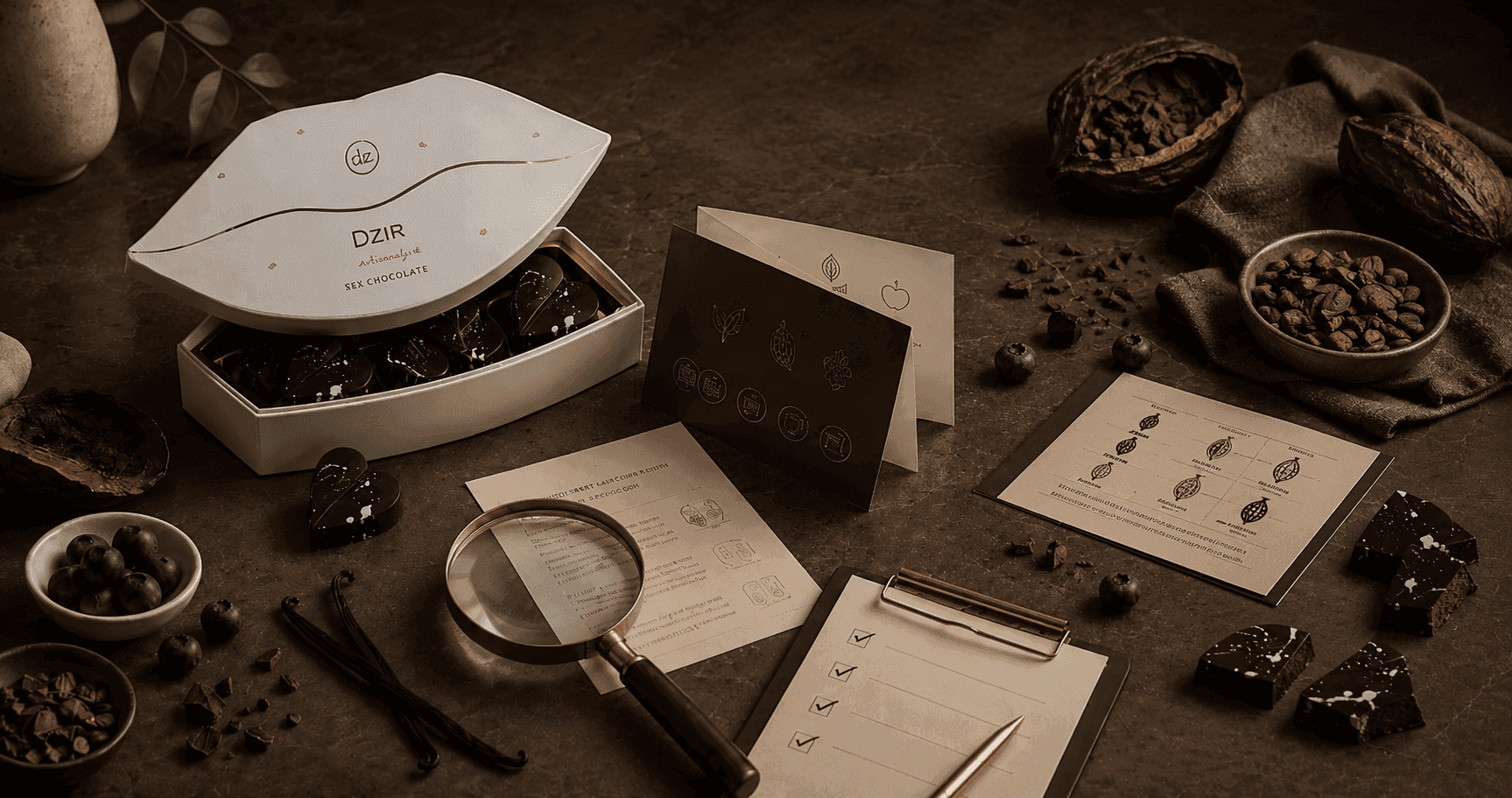
Choosing an intimacy chocolate involves more than comparing flavours or attractive packaging. Product quality and transparency can vary, so buyers should examine the ingredient label, serving guidance, allergen information, product claims, packaging and seller credibility before ordering.
A trustworthy product should clearly explain what it contains, who it is intended for and how it should be used. Its marketing should also avoid guaranteed physical, emotional or relationship outcomes.
This buyer’s guide “How to Choose an Intimacy Chocolate?” explains the practical checks adult couples can use to compare intimacy chocolates and make a more informed, comfortable decision.
Readers unfamiliar with the category can first explore our guide to intimacy chocolates for couples.
Quick answer: How should couples choose an intimacy chocolate?
Choose an intimacy chocolate by checking its complete ingredient list, serving guidance, allergen information, adult-only positioning, product claims, packaging privacy and seller authenticity.
Avoid products that hide important details, make guaranteed or medical-like promises or provide conflicting instructions. A suitable product should be transparent, responsibly marketed and comfortable for both partners to share.
Table of Contents
What to Check Before Buying an Intimacy Chocolate
Before purchasing, examine the product label, claims, packaging and seller information. These details should provide enough information for couples to understand what the product contains, how it should be used and whether it suits their needs.
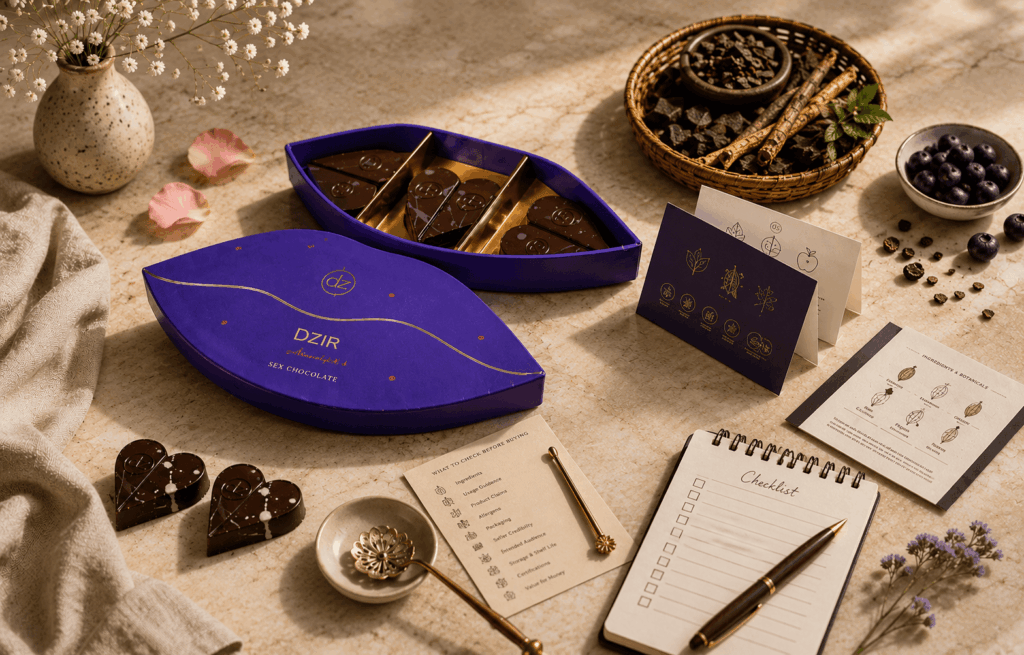
1. A Complete and Readable Ingredient List
A trustworthy product should display a complete ingredient list in a place that is easy to find.
The label should identify the chocolate ingredients and any added botanicals, caffeine, flavourings or other relevant components. Vague phrases such as “special blend,” “natural formula” or “secret ingredients” do not provide enough useful information.
Ingredient transparency helps couples determine whether a product matches their dietary preferences, sensitivities and personal comfort level.
2. Clear Serving and Usage Guidance
The packaging or official product page should provide clear recommended usage guidance.
Check whether the instructions are easy to understand and remain consistent wherever the product is described. Missing or conflicting directions make it harder to use the product responsibly.
Couples should follow the current official label rather than advice from reviews, social-media posts or unofficial sellers.
For product-specific guidance, refer to the official information explaining how DZIR intimacy chocolate is intended to be used.
3. Allergen and Dietary Information
Review the label for allergens, dietary suitability and ingredients either partner may prefer to avoid.
Relevant information may include:
- Milk or dairy ingredients
- Nuts
- Soy
- Gluten-related information
- Caffeine
- Vegetarian or vegan suitability
These details should be visible on both the packaging and official product page.
This is a purchasing check rather than a medical assessment. Partners with allergies or personal health concerns should verify the current label and seek appropriate professional advice where necessary.
4. Intended Audience and Age Suitability
A couple-focused chocolate should clearly state that it is intended for adults. The label or product page should identify its intended audience and any applicable age restriction.
An intimacy-focused product should also be chosen with mutual awareness. It should never be given secretly or used to pressure someone into an experience they have not agreed to.
5. Realistic and Responsible Product Claims
Trustworthy claims should be specific, limited and consistent with the information available on the label.
Be cautious when a product promises:
- Guaranteed results
- Immediate effects for everyone
- Guaranteed attraction
- Permanent changes
- Treatment of a medical condition
- No possibility of side effects
A confident claim is not automatically a credible one. Responsible marketing should leave room for individual differences and avoid presenting the product as a medical treatment.
How to Evaluate Ingredient Transparency?
A visible ingredient list is a good starting point, but buyers should also check whether the information is complete, specific and consistent.
Check Whether Every Major Ingredient Is Named
The main ingredients should be identified individually.
A phrase such as “premium botanical formula” provides less information than a clear list naming the botanicals included. Branded blends should not be used to hide the main components of the product.
Both partners should understand what the product contains before reaching the checkout page.
Look for Quantities or Serving Context Where Available
Naming an ingredient does not necessarily show how much of it is present.
When quantities or serving context are disclosed, they can help buyers interpret the label more accurately. However, the presence of a named ingredient alone does not prove that every promotional claim associated with it is accurate.
Check for Stimulants and Other Relevant Components
Some couples may want to know whether the product contains caffeine, stimulatory botanicals or other ingredients that matter to their preferences.
The key purchasing question is whether these components are clearly disclosed. Relevant ingredients should not be hidden in small print or omitted from the online product description.
For a broader safety discussion, read about DZIR chocolate side effects and safety considerations.
Distinguish Ingredient Disclosure From Ingredient Claims
Ingredient disclosure and ingredient claims serve different purposes.
Ingredient disclosure explains what the product contains.
Ingredient claims describe what the seller says those ingredients may do.
A transparent label does not automatically prove every marketing statement. Similarly, a strong promotional claim is not a substitute for a complete ingredient list.
Use two separate questions when evaluating a product:
- Is the formulation clearly disclosed?
- Are the claims realistic and responsibly presented?
Verify Product Details on the Official Label
Use the official label and product page as the primary sources for product-specific information.
Verify details through:
- The physical packaging
- The official product page
- Manufacturer or seller information
- Customer support when clarification is necessary
Reviews and social-media posts may provide opinions, but they should not replace official product information.
How to Know Whether Product Claims Are Trustworthy?
Trustworthy claims tend to be specific and measured. Dramatic promises deserve closer examination.
Be Careful With Guaranteed Results
No responsible seller should imply that every customer will have the same experience.
Be cautious with statements such as:
- “Works instantly for everyone”
- “Guaranteed performance”
- “No side effects for anyone”
- “Clinically proven” without accessible support
People differ in preferences, expectations and sensitivities. A product does not become more credible simply because its marketing sounds more confident.
Separate Product Experience From Medical Treatment
An intimacy chocolate should not be presented as a substitute for diagnosis, treatment or professional medical care.
A seller may position a product for adult couples, date nights or private occasions. That is different from claiming that it treats a medical or sexual-health condition.
Look for Specific Rather Than Vague Language
Specific wording gives buyers more useful information.
Responsible language may include:
- Intended for adult couples
- Follow the recommended guidance
- Review the complete ingredient list
- Individual experiences may vary
- Check suitability before use
Vague superlatives mainly create excitement. They do not help buyers understand the product.
Check Whether Supporting Information Is Accessible
Important information should be available before purchase.
Buyers should be able to find:
- Ingredient information
- Usage guidance
- Product quantity
- Seller or manufacturer identity
- Customer-support details
- Delivery information
- Refund or replacement terms
- Relevant disclosures
When a seller makes a specific claim, buyers should be able to understand what it means and whether supporting information is available.
How to Choose the Right Intimacy Chocolate for Your Needs?
The selected product should suit the intended occasion, both partners’ preferences and the level of privacy they expect.
Choose According to the Occasion
For a private date night, couples may prioritise shareability, simplicity and discreet delivery. An anniversary gift may place more emphasis on presentation.
However, attractive gift packaging still needs to be supported by a complete ingredient list, clear guidance and reliable seller information.
Consider Both Partners’ Preferences
A shared product should be suitable for both people.
Consider:
- Flavour preferences
- Dietary requirements
- Allergens
- Ingredient sensitivities
- Privacy preferences
- Mutual willingness to try it
Do not select a couple-focused product based only on one partner’s expectations.
Decide Whether Presentation Matters
Some partners want a product that looks suitable for gifting, while others prefer simple and functional packaging.
A gift-oriented option may prioritise:
- Attractive presentation
- A structured internal layout
- Discretion
- Shareability
Presentation can enhance the experience, but it should not replace transparency or product quality.
Consider Taste Alongside Product Positioning
An intimacy-focused product should still be enjoyable as chocolate.
Marketing may attract attention, but flavour and texture remain part of the experience. Choose an option both partners are likely to enjoy rather than selecting solely because the box makes a strong intimacy-related claim.
What Features Matter in Packaging?
Good packaging should protect the chocolate, preserve privacy and provide essential information.
Discreet Outer Packaging
Discreet packaging may be important when an order is delivered to a shared home, apartment reception, hostel or workplace.
Look for:
- Neutral external packaging
- No unnecessary product description outside
- Secure sealing
- Clear privacy information
Do not assume that delivery will be discreet unless the seller explains how the order is packaged.
Protective Packaging
Chocolate may be affected by heat, pressure and handling during delivery.
Protective features may include:
- A secure internal tray
- Sealed wrapping
- Heat-conscious measures where relevant
- Packaging that limits movement and breakage
- A clear process for reporting damage
Clear Labelling Inside the Package
The inner label should provide the information buyers need after delivery.
Look for:
- Ingredient list
- Allergen information
- Usage guidance
- Product quantity
- Expiry or best-before information
- Manufacturer or seller details
Gift-Ready Presentation
Presentation may matter for anniversaries, date nights and other private celebrations.
However, attractive packaging should remain a secondary consideration. The strongest packaging combines presentation with protection, privacy and clear product information.
How to Know the Seller Is Reliable?
A reliable seller should be identifiable, reachable and consistent about the product being sold.
Prefer an Official or Authorised Purchase Source
An official website or authorised seller is usually easier to verify than an unknown social-media account.
Official or authorised sources are more likely to provide:
- Current product information
- Accurate ingredient details
- Correct usage guidance
- Customer-support access
- Authentic packaging
- Visible purchase policies
Before ordering from another source, check whether the brand identifies it as an authorised seller.
Check Contact and Business Information
A trustworthy store should provide more than a product page and checkout button.
Look for:
- Customer-support details
- Seller or business identity
- Delivery information
- Privacy policy
- Terms and conditions
- Refund or replacement information
- Secure checkout
Missing details make it harder to understand who is responsible if a problem occurs.
Review the Refund and Replacement Policy
Check how the seller handles damaged or incorrect orders.
The policy should explain the process for:
- Melted chocolate
- Damaged packaging
- Incorrect items
- Missing deliveries
- Unopened returns where applicable
- Evidence required for a replacement
A clear policy helps buyers understand what support is available before they pay.
Check Product Information Consistency
Product details should match across the official website, packaging and checkout page.
Compare:
- Ingredient list
- Usage guidance
- Product quantity
- Flavour name
- Allergen information
- Pack contents
Conflicting information should be clarified before purchase. Consistency is one of the strongest signs that product information is being managed responsibly.
How to Compare Price and Overall Value?
A higher price does not automatically indicate a more transparent or suitable product.
Evaluate whether the price is supported by:
- Clearly stated quantity
- Complete product information
- Protective packaging
- Accessible customer support
- Transparent shipping charges
- Clear replacement terms
The objective is not simply to find the cheapest box. It is to understand what is included and whether the product fits both partners’ preferences and intended occasion.
For verified product-specific information, check the current DZIR chocolate price in India.
What to Avoid When Buying an Intimacy Chocolate?
The following warning signs do not automatically prove that a product is unsuitable, but they suggest that buyers should investigate further.
Hidden or Incomplete Ingredient Information
Avoid products that use broad descriptions without naming the main ingredients. Buyers should be able to review the formulation before checkout.
Missing or Conflicting Usage Instructions
Instructions should be visible and consistent. When the packaging and official website provide different guidance, contact the seller before using the product.
Guaranteed or Medical-Like Promises
Be cautious with claims that guarantee attraction, performance, treatment or identical results for everyone.
Missing Allergen Information
Do not assume that a chocolate is free from milk, nuts, soy or other common allergens unless the label clearly confirms it.
No Identifiable Seller or Customer Support
Anonymous storefronts and unreachable support channels make accountability difficult to verify.
Inconsistent Product Details
Different ingredients, quantities or instructions across multiple pages are a warning sign. Ask the seller to confirm the current information before ordering.
Unclear Expiry or Quantity Information
Buyers should know how much product they are purchasing and where to find its expiry or best-before information.
Pressure-Based Marketing
Avoid marketing that encourages secret use or implies that a product can replace mutual communication and consent.
Couple-focused products should always be approached with awareness, respect and comfort from both partners.
Five Checks Before Buying Intimacy Chocolate
A practical way to evaluate a product is to check five signals.
1. Transparent Ingredients
The product clearly names its primary ingredients and relevant components.
2. Consistent Instructions
Usage guidance matches across the packaging and official website.
3. Responsible Claims
The seller avoids guaranteed, universal or medical-like promises.
4. Protective and Discreet Packaging
The product is packaged to preserve both condition and delivery privacy.
5. Verifiable Seller Support
The seller provides business details, customer support and visible purchase policies.
A product that performs well across all five signals is easier to evaluate than one relying mainly on bold claims or attractive packaging.
Quick Intimacy Chocolate Evaluation Table
| Buying factor | What to look for | Warning sign |
|---|---|---|
| Ingredients | Complete and readable disclosure | Hidden or vague formula |
| Instructions | Clear, consistent official guidance | Missing or conflicting directions |
| Claims | Specific and responsible language | Guaranteed or instant-result promises |
| Packaging | Protective, sealed and discreet | No packaging or privacy information |
| Seller | Identifiable business and support | Anonymous or unverifiable seller |
| Product details | Matching information across sources | Different quantities or ingredients |
| Purchase policy | Clear replacement process | No visible support procedure |
The Intimacy Chocolate Buyer Checklist
Before buying, confirm that the product provides:
- A complete and readable ingredient list
- Clear usage guidance
- Visible allergen information
- Adult-only positioning
- Realistic product claims
- Manufacturer or seller details
- Discreet delivery information
- Protective internal packaging
- Expiry or best-before information
- Customer-support and replacement information
- An official or authorised purchase source
Also choose a flavour that both partners are comfortable trying.
A product does not need dramatic promises to be a good choice. Clear information, responsible positioning and suitability for both partners are stronger buying signals.
Is DZIR an Option to Consider?
Adult couples considering DZIR should review the current ingredients, usage guidance, allergen information, packaging details and ordering terms on the official product page.
Readers looking for a complete product introduction can learn what DZIR intimacy chocolate is.
This buyer’s guide does not rank DZIR against other products or guarantee a particular experience. Its purpose is to provide a neutral framework that can be applied before choosing any couple-focused chocolate.
Readers ready to explore category recommendations can also review our guide to the best aphrodisiac chocolate for couples.
Final Verdict: What Makes an Intimacy Chocolate Worth Choosing?
The right intimacy chocolate is not necessarily the option with the highest price, strongest claim or most elaborate box.
A suitable product gives both partners enough clear information to make a comfortable decision. Look for transparent ingredients, consistent instructions, visible allergen details, responsible adult positioning and realistic marketing.
The packaging should protect the chocolate and preserve delivery privacy. The seller should also be identifiable, easy to contact and clear about damaged orders or replacements.
Taste remains important. A couple-focused product should still be enjoyable as chocolate and should reflect both partners’ preferences.
Learning how to choose an intimacy chocolate means looking beyond the front of the box. Transparency, mutual comfort and responsible product information matter more than dramatic promises, and individual experiences may vary.
Frequently Asked Questions
What should I check before buying an intimacy chocolate?
Check the ingredient list, usage guidance, allergen information, age positioning, expiry details and product claims. You should also verify the packaging, seller identity and replacement policy. The information should remain consistent across the official website, checkout page and physical label.
How can I tell whether an intimacy chocolate is trustworthy?
A trustworthy product provides transparent ingredients, clear guidance, realistic claims and visible seller details. Customer support and purchase policies should be easy to find. Be cautious when a product hides its formula, guarantees results or provides conflicting information.
Should I choose an intimacy chocolate based only on ingredients?
No. Ingredients are important, but buyers should also consider allergens, flavour, packaging, seller reliability and personal suitability. The presence of a particular ingredient does not automatically prove every promotional claim associated with it.
Is discreet packaging important?
Discreet packaging can matter when an order is delivered to a shared home, reception desk, hostel or workplace. Look for neutral outer packaging and clear privacy information. Its importance depends on the recipient’s preferences and delivery circumstances.
Where should I buy intimacy chocolate?
The official brand website or an authorised seller is usually the easiest source to verify. Before ordering, check the business details, current product information, customer-support options and replacement policy. Avoid relying solely on unknown social-media pages.
What claims should I avoid when comparing intimacy chocolates?
Be cautious with guaranteed, universal or instant-result promises. Claims involving permanent effects, medical treatment or identical outcomes for every person should be examined carefully. Responsible sellers generally use specific, limited language and encourage buyers to follow the official guidance.
Related posts

10 Jul 202616 min read
Romantic Chocolate Gift Ideas for Couples in India
Discover how a romantic chocolate gift for couples creates memorable moments for anniversaries, date nights, Valentine’s Day, and private celebrations.
4 Jul 202612 min read
Dzir Chocolate Price in India: Offers & How to Buy
Check the latest Dzir chocolate price in India, compare flavours, understand delivery timelines, payment methods, and order directly from the official website.

30 Jun 202610 min read
Dzir Chocolate Side Effects: Is It Safe?
Dzir Chocolate side effects, safety, ingredients, who should avoid it, and whether it’s safe to enjoy as part of a healthy lifestyle

28 Jun 202614 min read
Sex Chocolate vs. Libido Pills: Benefits & Differences
Sex Chocolate vs Libido Pills compares benefits, key differences, safety points, and the better choice for couples who want mood, intimacy, and shared connection.