IN THIS ARTICLETable of contents27 sections
One dark chocolate bar may taste smooth, fruity and gently roasted. Another may taste dry, acidic, earthy or sharply bitter even when both wrappers display the same cocoa percentage.
Why does this happen?
The answer begins with the cocoa bean, but it does not end there. Fermentation, drying, roasting, refining, conching and the final recipe all influence the taste of finished chocolate.
This guide explains how dark chocolate is made, what ingredients it usually contains, and the three main factors that determine how bitter it tastes.
Quick Answer: How Is Dark Chocolate Made?
Dark chocolate is made by fermenting, drying and roasting cocoa beans, removing their shells, and grinding the nibs into cocoa mass. The cocoa mass is mixed with sugar and cocoa butter before being refined, conched, tempered and moulded.
Its bitterness depends mainly on:
- Natural compounds in the cocoa beans
- Fermentation, roasting and other processing choices
- The balance of cocoa, cocoa butter and sugar in the recipe
The International Cocoa Organization describes harvesting, fermentation, drying, roasting, winnowing and grinding as key stages in transforming cocoa beans into chocolate ingredients.
Table of Contents
What Is Dark Chocolate Made From?
Dark chocolate is generally made from three main ingredients:
- Cocoa mass
- Cocoa butter
- Sugar
Some recipes may also include vanilla, lecithin, flavourings or small amounts of other permitted ingredients.
Cocoa mass
Cocoa mass, also called cocoa liquor, is produced by grinding roasted cocoa nibs. Despite the word “liquor,” it does not contain alcohol.
Grinding releases the cocoa butter naturally present in the nibs and transforms the solid cocoa particles into a thick, flowing paste.
Cocoa butter
Cocoa butter is the natural fat found inside cocoa beans. It contributes to the way chocolate melts, flows and feels in the mouth.
A recipe containing more cocoa butter may feel smoother even when the total cocoa percentage remains high.
Sugar
Sugar balances cocoa’s naturally bitter, acidic and roasted characteristics.
A chocolate with less sugar may allow bitterness and acidity to feel more noticeable. However, sugar content is only one part of the final flavour.
International standards describe dark or bittersweet chocolate through its cocoa-derived ingredients and composition, although exact definitions and labelling rules can differ between markets.
How Dark Chocolate Is Made: From Cocoa Pod to Finished Bar
Dark chocolate passes through several stages before it becomes a smooth, finished bar. Each stage has a specific purpose, from preparing the cocoa beans to developing the chocolate’s texture, aroma and appearance.
1. Ripe cocoa pods are harvested
Chocolate begins with the cacao tree, which produces pods containing cocoa beans surrounded by soft, sweet pulp.
When the pods are ripe, they are harvested and opened. The beans and surrounding pulp are then collected for fermentation.
Fresh cocoa beans do not yet have the familiar aroma or flavour of finished chocolate. Those characteristics develop gradually during fermentation, drying, roasting and the later stages of production.
2. The beans are fermented
The cocoa beans and pulp are placed in boxes, baskets, heaps or another fermentation system.
Naturally occurring microorganisms act on the sugary pulp, producing heat and chemical changes inside the beans. This stage begins the development of compounds that later contribute to chocolate flavour and aroma.
After fermentation, the beans are prepared for drying.
3. The fermented beans are dried
The fermented beans are spread out and dried to reduce their moisture.
Drying helps stabilise the beans so they can be stored, transported and roasted safely. Depending on the climate and drying method, this stage may take several days.
Once the beans reach the appropriate moisture level, they are cleaned and sorted before roasting.
4. The dried beans are roasted
The dried cocoa beans are roasted under controlled temperatures.
Roasting develops many of the aromas commonly associated with cocoa and chocolate. The temperature and roasting time may vary according to the bean variety, origin, moisture level and flavour profile the chocolate maker wants to create.
After roasting, the beans become easier to crack and separate from their shells.
5. The shells are removed and the nibs are ground
The roasted beans are cracked, and their thin outer shells are removed through a process called winnowing.
The edible pieces that remain are known as cocoa nibs. These nibs are ground into cocoa mass, releasing their natural cocoa butter and creating a thick, flowing paste.
6. The ingredients are mixed and refined
The cocoa mass is combined with sugar, additional cocoa butter and any optional recipe ingredients.
The mixture then passes through refining equipment that reduces the size of the solid particles. This is important because particles that are too large can make chocolate feel rough or gritty.
Refining helps create the fine, smooth texture expected from finished chocolate.
7. The chocolate is conched
After refining, the chocolate is continuously mixed and worked through a process known as conching.
Conching helps distribute the cocoa solids, sugar and cocoa butter evenly. It also improves the chocolate’s flow, texture and overall flavour integration.
The length and temperature of conching depend on the recipe, equipment and intended style of the finished chocolate.
8. The chocolate is tempered and moulded
The finished chocolate is carefully heated and cooled through a process called tempering.
Tempering encourages stable cocoa-butter crystals to form. Properly tempered dark chocolate generally has:
- A glossy surface
- A clean snap
- A smooth texture
- Better resistance to softening
- A more even appearance
The tempered chocolate is poured into moulds, cooled, removed and packaged.
These stages complete the transformation from fresh cocoa beans into a finished dark chocolate bar.
Why Does Dark Chocolate Taste Bitter?
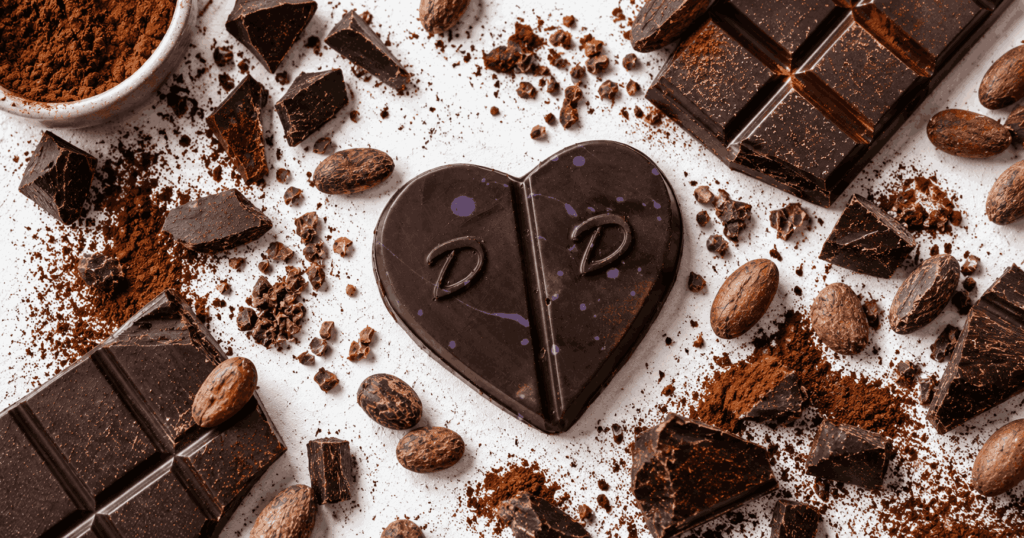
Dark chocolate does not taste bitter because of one ingredient or one manufacturing stage.
Its final flavour develops through the combined influence of the bean, the production process and the recipe.
The three main factors are:
- Natural cocoa compounds and bean characteristics
- Fermentation, drying, roasting and processing
- Cocoa percentage and ingredient balance
Factor 1: Natural cocoa compounds and bean characteristics
Cocoa beans are naturally bitter and astringent before they are transformed into finished chocolate.
They contain methylxanthines, especially theobromine and smaller amounts of caffeine. They also contain polyphenols such as catechins and procyanidins.
Methylxanthines and phenolic compounds contribute to cocoa’s natural intensity. Some are associated with bitter taste, while several polyphenols contribute to both bitterness and astringency.
However, these compounds are not present in identical concentrations in every cocoa bean.
The starting flavour may be influenced by:
- Cocoa genetics and variety
- Growing region
- Climate
- Soil conditions
- Pod ripeness
- Harvesting practices
- Bean quality
- Post-harvest handling
One cocoa may begin with stronger bitter or drying characteristics. Another may naturally display more fruit, floral, nutty, earthy or traditional cocoa notes.
The chocolate maker can shape these characteristics, but manufacturing does not create every flavour from nothing. Part of the final taste is already connected to the bean’s origin and composition.
Factor 2: How Processing Changes Dark Chocolate’s Bitterness
The natural cocoa bean establishes the starting flavour, but processing determines how that flavour develops.
Fermentation, drying, roasting and conching can reduce, preserve or intensify bitter, acidic and astringent sensations. Small changes at any stage may cause two chocolates made with similar cocoa percentages to taste noticeably different.
Fermentation can reduce raw bitterness
Well-managed fermentation helps transform the harsh characteristics found in fresh cocoa beans.
During this stage, changes inside the beans reduce some polyphenols associated with strong bitterness and astringency. Fermentation also creates flavour precursors that later develop into chocolate aromas during roasting.
However, the result depends on factors such as fermentation time, temperature, aeration, bean variety and local conditions.
Under-fermented beans may retain:
- Green or raw flavours
- Strong astringency
- Sharp bitterness
- Limited chocolate aroma
Excessive or poorly controlled fermentation may produce unwanted acidity or unpleasant fermented notes.
Fermentation therefore influences both the intensity and quality of the bitterness that remains in the finished chocolate.
Drying affects acidity and flavour stability
Drying must reduce the beans’ moisture at a controlled rate.
When beans dry too quickly, some important flavour-related reactions may be interrupted. This can leave sharper acidic or underdeveloped characteristics.
Drying that is too slow or poorly controlled may increase the risk of mould, deterioration or unwanted flavours.
The purpose is not simply to make the beans dry as quickly as possible. It is to stabilise them while preserving the flavour potential created during fermentation.
Roasting can soften or intensify harsh flavours
Roasting has a major influence on chocolate aroma, bitterness and acidity.
A roast that is too light may leave the beans tasting:
- Raw
- Sour
- Green
- Strongly astringent
A more developed roast may reduce some raw characteristics and create deeper cocoa, nutty or toasted aromas.
However, an excessively aggressive roast may introduce:
- Burnt flavours
- Smoky notes
- Ash-like characteristics
- Harsh bitterness
The ideal roast depends on the cocoa bean. A longer or darker roast does not automatically produce better chocolate.
Conching helps integrate sharp sensations
Conching continues to shape the chocolate after refining.
It can reduce excess moisture, modify volatile aroma compounds and distribute the ingredients more evenly. As a result, sharp acidic or bitter sensations may feel smoother and better integrated with the rest of the flavour.
However, conching cannot completely correct:
- Poor-quality beans
- Inadequate fermentation
- Faulty drying
- Severe over-roasting
Longer conching also does not always mean better chocolate. Its effect depends on the temperature, recipe, equipment and intended flavour profile.
Alkalisation may modify acidity and bitterness
Some cocoa is treated with an alkaline substance through a method commonly called Dutch processing.
Alkalisation may change the cocoa’s:
- Colour
- Acidity
- Bitterness
- Astringency
- Overall flavour intensity
It can create a darker colour and a milder or less acidic taste, depending on how strongly the cocoa is treated.
However, alkalisation is optional and is not used in every dark chocolate.
Factor 3: Cocoa percentage and ingredient balance
Dark chocolate with a higher cocoa percentage generally contains a greater proportion of cocoa-derived ingredients and often less sugar.
This can make cocoa’s bitter, roasted or acidic characteristics feel more noticeable.
However, two chocolates labelled 70% cocoa can still taste completely different.
They may contain:
- Different cocoa varieties
- Cocoa from different growing origins
- Different ratios of cocoa solids and cocoa butter
- Different amounts of sugar
- Different fermentation profiles
- Different roasting profiles
- Different conching conditions
One 70% bar may taste smooth and fruity, while another may feel dry, earthy, acidic or sharply bitter.
How recipe elements influence taste
| Recipe element | General sensory influence |
|---|---|
| More cocoa material | Stronger overall cocoa intensity |
| More sugar | Greater perceived sweetness |
| More cocoa butter | Smoother melting and softer flavour delivery |
| Less sugar | Bitter and acidic notes may feel more noticeable |
These are general tendencies rather than fixed rules. Bean characteristics and processing decisions also affect the final result.
Cocoa percentage is not a bitterness score
A common mistake is to assume that a higher cocoa percentage must always produce harsher chocolate.
A carefully fermented and appropriately roasted 85% chocolate may taste smoother than a poorly processed 70% bar.
The percentage alone does not tell you:
- How naturally bitter the beans were
- How well they were fermented
- How they were dried
- How aggressively they were roasted
- How much of the cocoa content is cocoa butter
- How effectively the chocolate was refined and conched
- What flavour characteristics the maker intended to preserve
Cocoa percentage is a useful clue about overall composition and intensity, but it cannot predict the complete flavour experience.
Why Dark Chocolate Can Taste Bitter, Sour or Burnt
People often use the word “bitter” to describe every strong sensation they experience in dark chocolate.
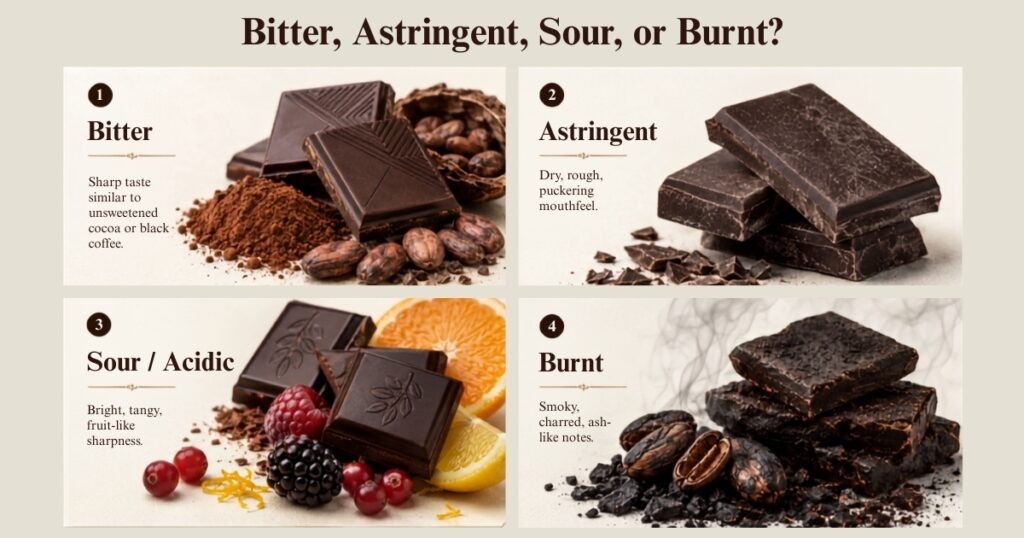
However, bitterness is only one part of the tasting experience.
| Sensation | What you may notice |
|---|---|
| Bitter | A sharp taste similar to unsweetened cocoa or black coffee |
| Astringent | A dry, rough or puckering feeling in the mouth |
| Sour or acidic | A bright, tangy, citrus-like or fruit-like sharpness |
| Burnt | Smoky, charred or ash-like flavours |
Bitterness
Bitterness is a basic taste. Cocoa’s methylxanthines and some of its polyphenols can contribute to it.
Astringency
Astringency is mainly a mouthfeel rather than a taste. It creates a dry, rough or puckering sensation and may occur alongside bitterness.
Sourness
Sourness comes from acids in the cocoa. Some acidity may be undesirable, but bright fruit-like acidity can also be an intentional characteristic in chocolate made from certain cocoa origins.
Burnt flavour
Burnt flavour may resemble smoke, ash or char. It should not be confused with the naturally deep roasted flavour of dark chocolate.
Strong burnt notes may indicate an aggressive roasting profile.
Conclusion
In conclusion, dark chocolate is made by fermenting, drying and roasting cocoa beans before grinding the nibs and combining the cocoa mass with sugar and cocoa butter. Its bitterness depends on the natural bean, the way it is processed and the final recipe. Cocoa percentage is useful, but it cannot predict flavour by itself. To understand how a bar may taste, look beyond the number and consider the bean, process and ingredient balance.
Related reading: Science Behind Chocolate and Romance: How It Shapes Mood and Bonding
Frequently Asked Questions
Why can two 70% dark chocolates taste different?
Cocoa percentage does not reveal the bean variety, growing origin, fermentation quality, roasting profile, cocoa-butter ratio, or exact sugar content. Two bars with the same percentage can therefore deliver very different levels of sweetness, bitterness, acidity, fruitiness, and astringency.
What is considered Dark Chocolate?
Dark chocolate is made mainly from cocoa solids, cocoa butter, and sugar, with little or no added milk. It usually contains a higher cocoa percentage than milk chocolate. The exact legal definition can vary by country, so the ingredient list and cocoa percentage are the best things to check.
Why does some dark chocolate taste sour?
Cocoa naturally contains acids, while fermentation creates additional acidity. Drying, roasting and conching influence how noticeable those acidic notes remain.
Is bitterness a sign of high-quality dark chocolate?
Not necessarily. Some bitterness is natural because cocoa contains bitter compounds, but extreme harshness may result from the bean variety, poor fermentation or aggressive roasting. Good dark chocolate should taste balanced rather than simply as bitter as possible.
Should dark chocolate be stored in the refrigerator?
Dark chocolate is generally best stored in a cool, dry place away from sunlight and strong odours. Refrigeration can expose it to moisture and odours, although it may be necessary in very hot conditions if the chocolate is sealed properly.
Can children eat dark chocolate?
Older children can enjoy a small amount of dark chocolate occasionally. However, it contains caffeine, theobromine, sugar and possible allergens, so portions should be limited. Avoid giving it to babies or close to bedtime, and always check the ingredient label first.
Related posts
26 Jun 202613 min read
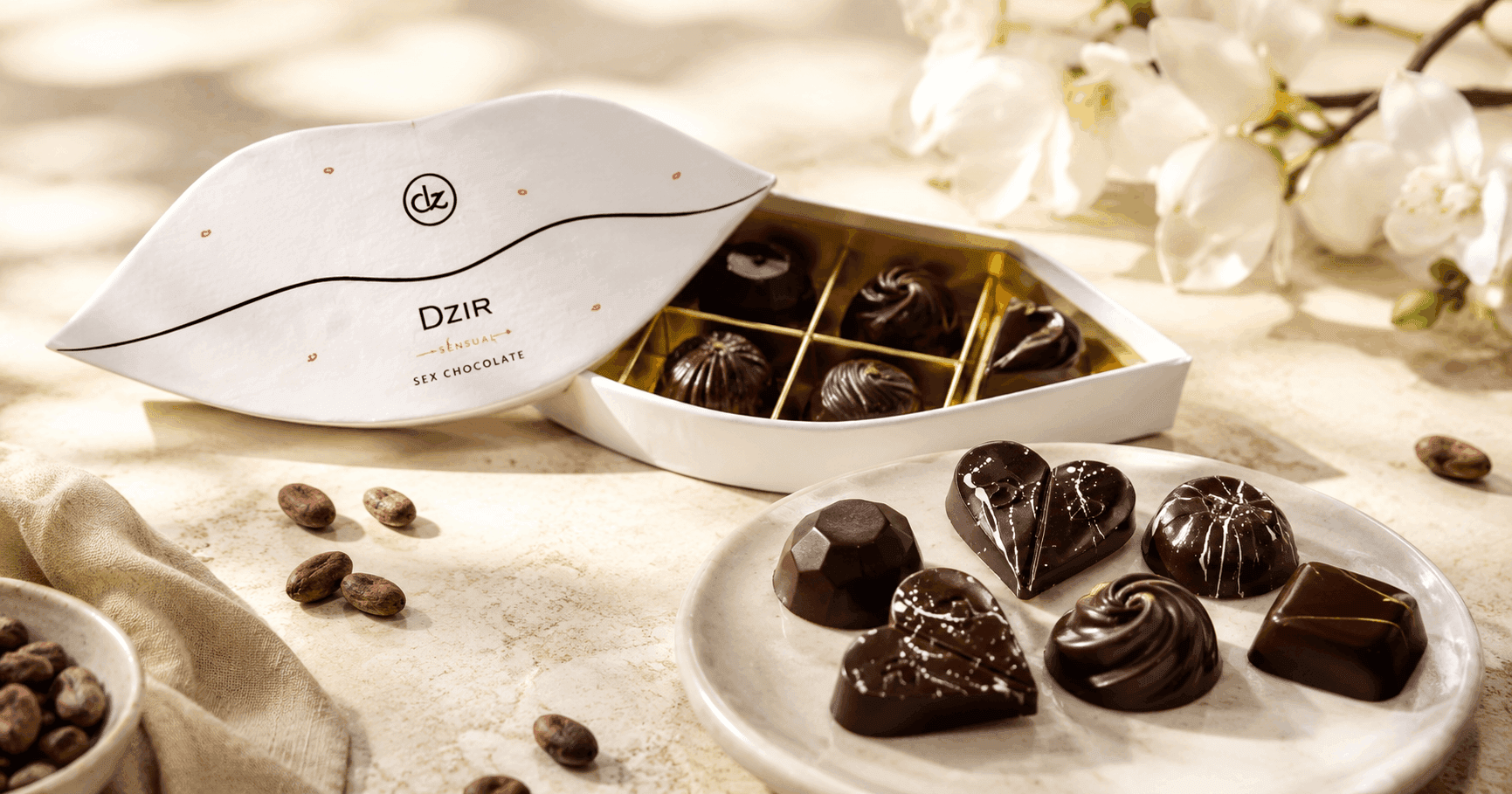
Best Aphrodisiac Chocolate for Couples in 2026
Intimacy chocolates for couples can turn ordinary moments into more meaningful shared experiences. Learn how they support mood, connection, romance, and emotional bonding.

22 Jun 202612 min read
The Science Behind Chocolate and Romance
The science behind chocolate and romance goes deeper than tradition. Find out how chocolate affects brain chemistry, boosts mood, and brings couples closer together.